
We live in the intersection of who we are, who we are becoming, and the ways our lives ripple outward into the world. A constant dance with self, future, and community.
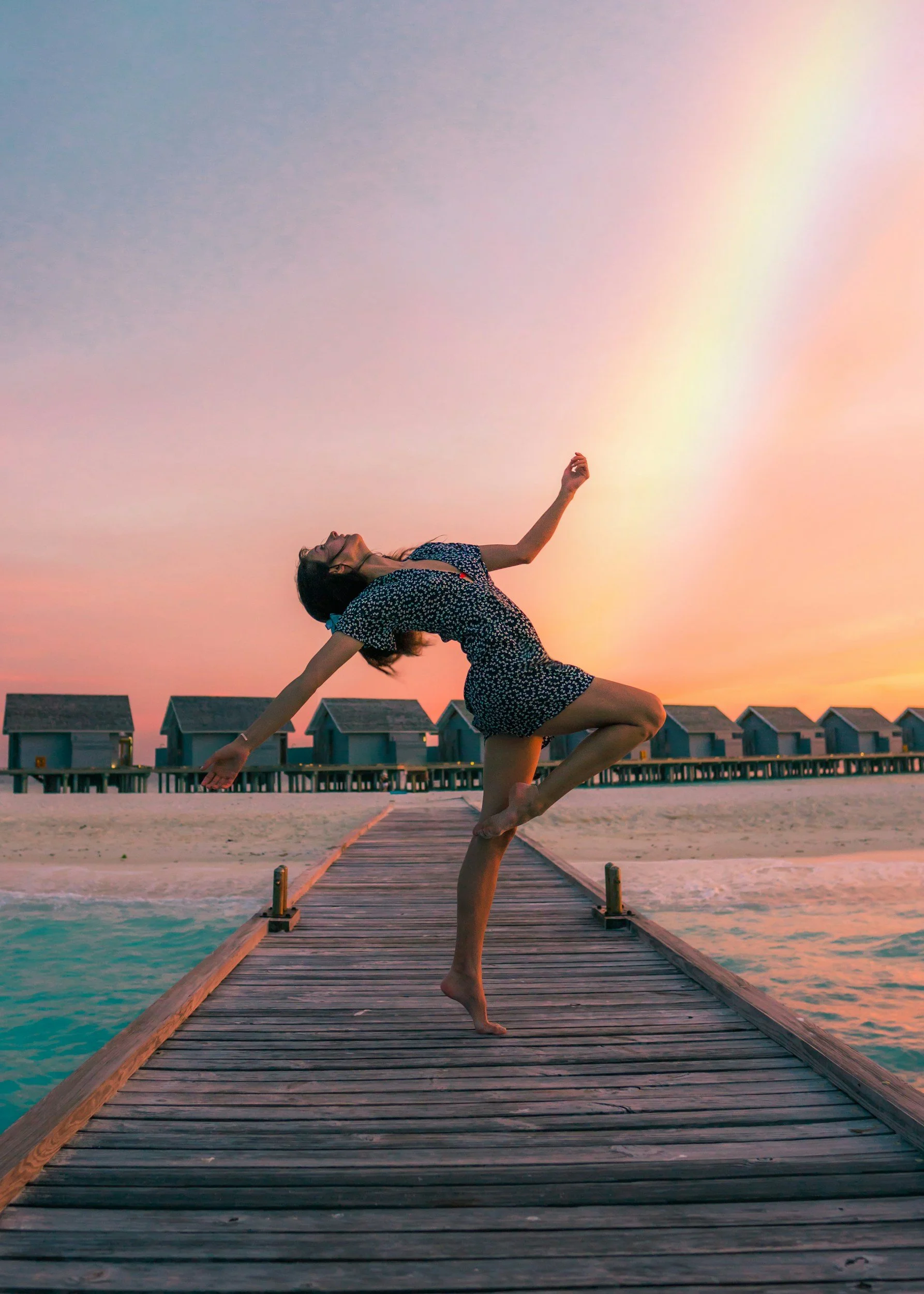
Movement teaches us presence, resilience, and courage … the same qualities we need in civic engagement.
Activist
Activism is the practice of moving ourselves and our communities toward justice — with the body, with our voice, with our choices, and with our collective imagination.
It’s not always protest. Sometimes it’s presence. Often it’s joy. It is choosing to act instead of disengaging.
An activist is maintains the rhythm of life in steady, shared, and sustaining movement.
Dance
Dance is a language of the body. An art of knowing, healing, resisting, and becoming. It is joy, discipline, and freedom woven together.
Dance belongs to every body, every age, every shape, and every story.
Dance grows the brain, softens the heart, and energizes the spirit. Dance teaches us how to be in community, how to stay in close connection with ourselves and each other. Dance is human intelligence in motion.
Feminist
Feminism is the ongoing work of creating a world where every person, especially those pushed to the margins, can move freely, safely, and with their full dignity. It moves best when we move together.
To be a feminist means naming power, unlearning conditioning, and refusing silence when any group is harmed.
Feminist is not just an identity, it is a practice.
Humanist
Humanism is the belief that every person has inherent worth, and that our shared humanity is the foundation for justice, art, connection, and public life. It is a worldview rooted in curiosity, compassion, and dignity.
A humanist asks: “How do we create systems and communities where people can live fully, move freely, and be treated with care?” And then—with presence, creativity, and collective courage—we step in and build that community together.
Democracy
Democracy is the collective choreography of self-governance. The choreography of many people moving together toward shared wellbeing.
It requires rhythm (participation), repetition (practice), and improvisation (adaptation).
Democracy depends on coordination, and coordination can be messy as we learn, yet it is learnable. One misstep doesn’t break the choreography — it just calls us to reset and rejoin the beat.